MIRA Lab

Research

MIRA Lab studies what learners know and can defend when AI can do the work.

The question

MIRA Lab studies what it means for a learner to know something. This question about knowledge and knowing has guided Ji Hyun Yu's research from the start. Her master's research examined how an argumentation model shapes the way learners state and support claims in online discussion. Her doctoral research developed and validated a scale of pre-service teachers' personal epistemologies, which are their beliefs about the nature of knowledge and how it is justified. Her work in learning analytics then used trace data from online courses to study how learners engage with ideas and with one another.

Generative AI makes this question more pressing. AI can now produce essays, code, and arguments that meet the requirements of a university assignment. Therefore, a finished product is weaker evidence of what a learner knows. A student may submit correct work that they cannot explain or defend.

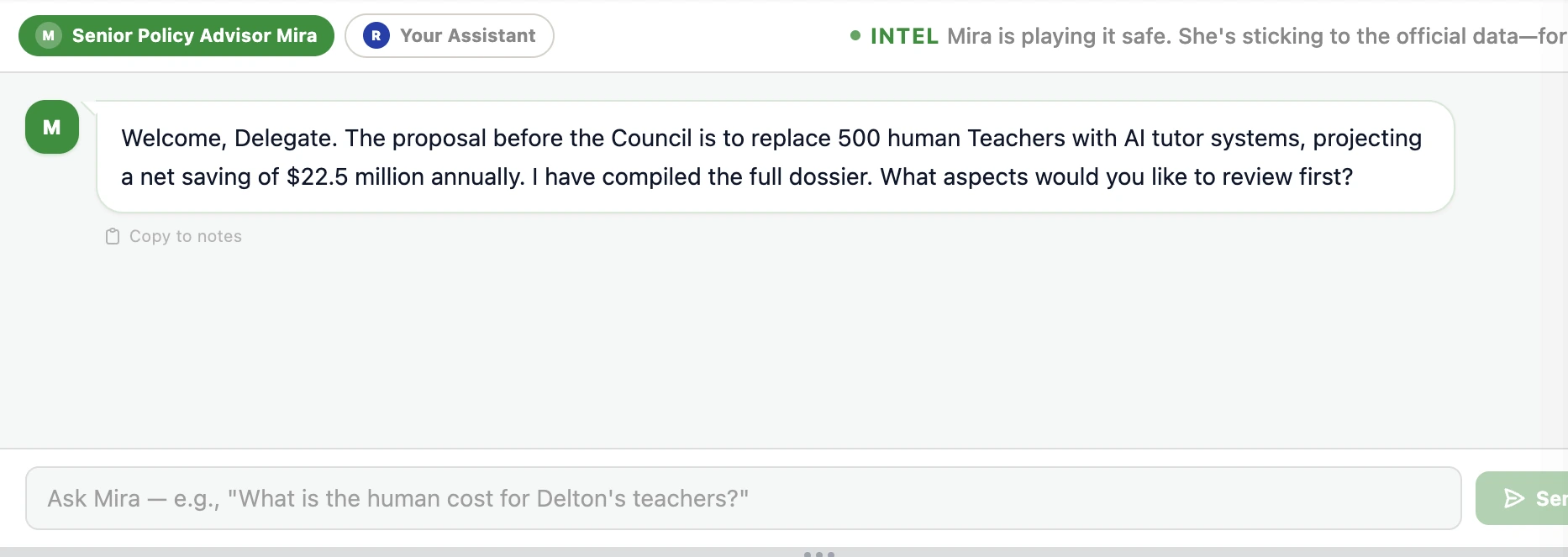
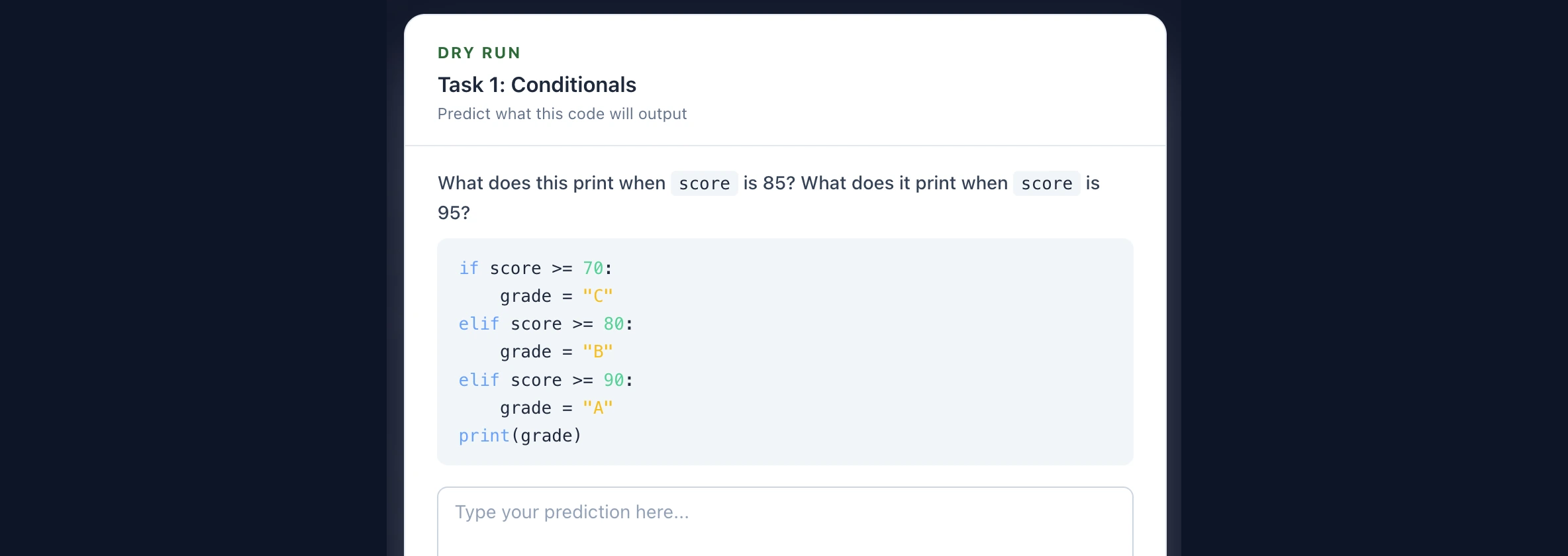
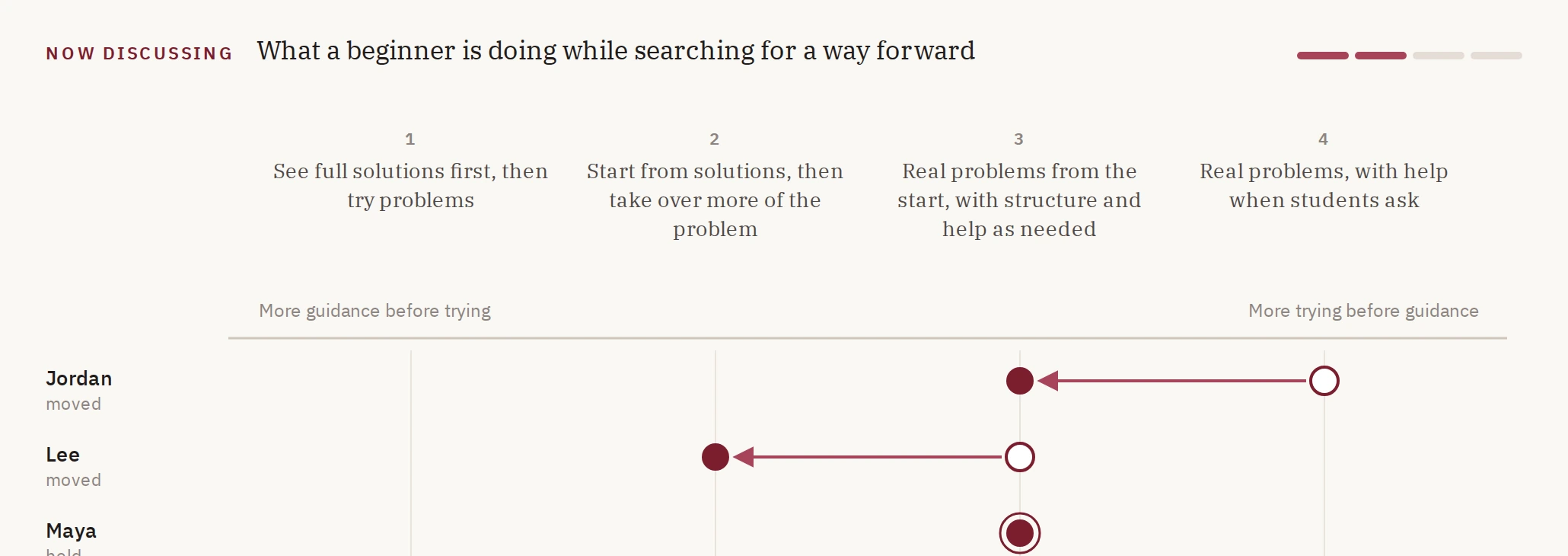
The lab studies this problem by designing and running learning environments. We build platforms that ask learners to explain, defend, and revise their work, and we run them in credit-bearing courses. The platforms record the moments when a learner accepts, revises, or rejects what an AI produces. These moments are rarely visible in the final product.

Concepts

Epistemic ownership

Written by Ji Hyun Yu

Epistemic ownership is a learner's capacity to explain, defend, and revise work they submit as their own. It concerns who holds the reasoning, not who produced the text. A learner who typed every word may lack it, and a learner who started from AI output may earn it.

More details

Theoretical lineage

Research in the learning sciences has long treated knowledge as something learners build rather than receive. Explanation is one way learners build knowledge. Chi et al. (1994) asked eighth-grade students to explain each line of a text on the circulatory system to themselves. These students gained deeper understanding than students who read the text twice. Argument is a second form. Kuhn (1991) asked people to state their theories on everyday problems, support them with evidence, and respond to opposing views. Many people could state a view but could not generate a counterargument or a rebuttal. Walton et al. (2008) showed that each common type of argument comes with critical questions that test whether it holds. Together, these traditions suggest that knowing something means being able to explain it and defend it under challenge.

Epistemic agency and ownership of learning

Epistemic ownership builds on research on epistemic agency. Scardamalia and Bereiter (1991) argued that learners should take on the high-level work of knowledge building, such as setting goals and judging progress, rather than leaving it to the teacher. Damşa et al. (2010) described shared epistemic agency in collaborative groups, with one side concerned with producing knowledge and another concerned with regulating the work. Miller et al. (2018) argued that students need a real role in shaping how knowledge is built in the classroom. Agency concerns the learner's role while knowledge is being built. Epistemic ownership is narrower. It concerns one piece of submitted work and whether the learner can explain, defend, and revise it. A learner can take an active role in a task and still submit work whose reasoning they cannot explain. The word ownership also appears in research on college readiness. Conley and French (2014) described student ownership of learning as a set of dispositions, including motivation, self-direction, and persistence. Epistemic ownership does not describe a disposition. It describes what the learner can demonstrate about a specific piece of work.

Mechanism

Why can a learner feel ownership without having it? People believe they understand complex phenomena in more depth than they actually do. This illusion is strongest for explanatory knowledge, and it breaks down when people try to write out an explanation (Rozenblit & Keil, 2002). External sources make the illusion worse. Across nine experiments, Fisher et al. (2015) found that searching the Internet led people to mistake access to information for their own understanding. Performance during a task also misleads learners about what they have learned (Soderstrom & Bjork, 2015). Therefore, ownership cannot be judged by the learner's confidence or by the quality of the product. It has to be tested by asking the learner to explain, defend, and revise.

Ownership and authorship in HCI

Human-computer interaction research has begun to separate ownership from authorship. Draxler et al. (2024) found that users did not feel they owned text that an AI had written for them. Yet they seldom declared the AI as an author. Users who had more influence over the text felt more ownership. This work shows that authorship and ownership can come apart. It measures ownership as a feeling, however. Epistemic ownership asks a different question. It asks whether the learner can carry out the reasoning the work contains.

Why it matters now

Generative AI makes this distinction urgent. Large language models produce text that is often indistinguishable from human writing, yet they do not understand what they produce (Floridi, 2023). As a result, a finished essay or program no longer shows who did the thinking. Knowledge workers report that their critical thinking has shifted toward verifying and integrating AI output (Lee et al., 2025). Learners who revise with ChatGPT show fewer metacognitive processes than learners supported by a human expert (Fan et al., 2025). A submission can now meet every criterion on a rubric while the student cannot explain a single step.

Our work

The MIRA Lab measures epistemic ownership through what students can do after they submit their work. Our platforms ask students to explain their reasoning, defend it against challenges, and revise it. We study these behaviors in credit-bearing courses.

References

  • Chi, M. T. H., de Leeuw, N., Chiu, M.-H., & LaVancher, C. (1994). Eliciting self-explanations improves understanding. Cognitive Science, 18(3), 439–477. https://doi.org/10.1016/0364-0213(94)90016-7
  • Conley, D. T., & French, E. M. (2014). Student ownership of learning as a key component of college readiness. American Behavioral Scientist, 58(8), 1018–1034.
  • Damşa, C. I., Kirschner, P. A., Andriessen, J. E., Erkens, G., & Sins, P. H. (2010). Shared epistemic agency: An empirical study of an emergent construct. Journal of the Learning Sciences, 19(2), 143–186. https://doi.org/10.1080/10508401003708381
  • Draxler, F., Werner, A., Lehmann, F., Hoppe, M., Schmidt, A., Buschek, D., & Welsch, R. (2024). The AI ghostwriter effect: When users do not perceive ownership of AI-generated text but self-declare as authors. ACM Transactions on Computer-Human Interaction, 31(2), Article 25. https://doi.org/10.1145/3637875
  • Fan, Y., Tang, L., Le, H., Shen, K., Tan, S., Zhao, Y., Shen, Y., Li, X., & Gašević, D. (2025). Beware of metacognitive laziness: Effects of generative artificial intelligence on learning motivation, processes, and performance. British Journal of Educational Technology, 56(2), 489–530. https://doi.org/10.1111/bjet.13544
  • Fisher, M., Goddu, M. K., & Keil, F. C. (2015). Searching for explanations: How the Internet inflates estimates of internal knowledge. Journal of Experimental Psychology: General, 144(3), 674–687. https://doi.org/10.1037/xge0000070
  • Floridi, L. (2023). AI as agency without intelligence: On ChatGPT, large language models, and other generative models. Philosophy & Technology, 36, Article 15. https://doi.org/10.1007/s13347-023-00621-y
  • Kuhn, D. (1991). The skills of argument. Cambridge University Press.
  • Lee, H.-P., Sarkar, A., Tankelevitch, L., Drosos, I., Rintel, S., Banks, R., & Wilson, N. (2025). The impact of generative AI on critical thinking: Self-reported reductions in cognitive effort and confidence effects from a survey of knowledge workers. In Proceedings of the 2025 CHI Conference on Human Factors in Computing Systems (Article 1121, pp. 1–22). Association for Computing Machinery. https://doi.org/10.1145/3706598.3713778
  • Miller, E., Manz, E., Russ, R., Stroupe, D., & Berland, L. (2018). Addressing the epistemic elephant in the room: Epistemic agency and the Next Generation Science Standards. Journal of Research in Science Teaching, 55(7), 1053–1075. https://doi.org/10.1002/tea.21459
  • Rozenblit, L., & Keil, F. (2002). The misunderstood limits of folk science: An illusion of explanatory depth. Cognitive Science, 26(5), 521–562. https://doi.org/10.1207/s15516709cog2605_1
  • Scardamalia, M., & Bereiter, C. (1991). Higher levels of agency for children in knowledge building: A challenge for the design of new knowledge media. Journal of the Learning Sciences, 1(1), 37–68. https://doi.org/10.1207/s15327809jls0101_3
  • Soderstrom, N. C., & Bjork, R. A. (2015). Learning versus performance: An integrative review. Perspectives on Psychological Science, 10(2), 176–199. https://doi.org/10.1177/1745691615569000
  • Walton, D., Reed, C., & Macagno, F. (2008). Argumentation schemes. Cambridge University Press.

Productive friction

Written by Ji Hyun Yu

Productive friction is effort that a learning environment deliberately keeps with the learner because that effort produces learning. A friction is productive when it is relevant to the learning goal, cannot be taken over by an AI system without a loss of learning, and is tractable for the learner to resolve.

More details

Theoretical lineage

Learning research has long shown that conditions that make learning easier in the moment do not always produce durable learning. Bjork (1994) found that training methods that speed up acquisition can fail to support performance after training ends. Bjork and Bjork (2011) called conditions such as spacing, interleaving, and self-testing "desirable difficulties." These conditions are desirable because responding to them engages the processes that build lasting knowledge. Kapur (2008) showed a related effect in problem-solving. Students who worked on complex problems before instruction produced weaker solutions at first but learned more in the end. Later work identified the design features that make this sequence effective (Kapur, 2016; Loibl et al., 2017). Research on productive struggle in mathematics (Warshauer, 2015) and on confusion (D'Mello et al., 2014) supports the same conclusion. Effort helps learning when it is well designed and eventually resolved.

Mechanism

If difficulty helps, why do learners avoid it? Performance during a task is an unreliable signal of learning, yet people treat it as one (Soderstrom & Bjork, 2015). Kirk-Johnson et al. (2019) found that learners who experienced a strategy as effortful judged it less effective and chose not to use it again. This happened even when the effortful strategy produced better retention. De Bruin et al. (2023) argued that learners need support both to start and to stay with desirable difficulties. Therefore, productive difficulty cannot be left to learner choice. It has to be built into the learning environment.

Design friction in HCI

Human-computer interaction research reached a similar point from another direction. Interface design usually treats friction as a cost to remove. Cox et al. (2016) argued that friction added on purpose can be useful. Small deliberate interruptions can move users from automatic to reflective interaction. This work shows that friction is something designers can place and time. It does not say which frictions produce learning. Productive friction combines both traditions. It uses the design stance of HCI and judges each friction by its effect on learning.

Why it matters now

Generative AI can remove friction on a new scale. Earlier examples of cognitive offloading were bounded actions, such as setting a phone reminder (Risko & Gilbert, 2016). Today an AI system can do the reasoning, writing, and evaluation that a learning task is meant to exercise. The effects are measurable. In a field experiment with nearly 1,000 high school students, an unrestricted AI tutor raised practice grades by 48%. When access was removed, those students scored 17% lower than peers who never had access (Bastani et al., 2025). A tutor with learning safeguards largely prevented this loss. Learners who revised essays with ChatGPT showed fewer metacognitive processes than learners supported by a human expert (Fan et al., 2025). Knowledge workers with higher confidence in AI reported less critical thinking (Lee et al., 2025).

Our work

The MIRA Lab asks which parts of an AI-assisted task must stay with the learner. We build platforms that keep those parts with the learner and test their effects in credit-bearing courses.

References

  • Bastani, H., Bastani, O., Sungu, A., Ge, H., Kabakcı, Ö., & Mariman, R. (2025). Generative AI without guardrails can harm learning: Evidence from high school mathematics. Proceedings of the National Academy of Sciences, 122(26), Article e2422633122. https://doi.org/10.1073/pnas.2422633122
  • Bjork, E. L., & Bjork, R. A. (2011). Making things hard on yourself, but in a good way: Creating desirable difficulties to enhance learning. In M. A. Gernsbacher, R. W. Pew, L. M. Hough, & J. R. Pomerantz (Eds.), Psychology and the real world: Essays illustrating fundamental contributions to society (pp. 56–64). Worth Publishers.
  • Bjork, R. A. (1994). Memory and metamemory considerations in the training of human beings. In J. Metcalfe & A. P. Shimamura (Eds.), Metacognition: Knowing about knowing (pp. 185–205). MIT Press. https://doi.org/10.7551/mitpress/4561.003.0011
  • Cox, A. L., Gould, S. J. J., Cecchinato, M. E., Iacovides, I., & Renfree, I. (2016). Design frictions for mindful interactions: The case for microboundaries. In Proceedings of the 2016 CHI Conference Extended Abstracts on Human Factors in Computing Systems (pp. 1389–1397). Association for Computing Machinery. https://doi.org/10.1145/2851581.2892410
  • D'Mello, S., Lehman, B., Pekrun, R., & Graesser, A. (2014). Confusion can be beneficial for learning. Learning and Instruction, 29, 153–170. https://doi.org/10.1016/j.learninstruc.2012.05.003
  • de Bruin, A. B. H., Biwer, F., Hui, L., Onan, E., David, L., & Wiradhany, W. (2023). Worth the effort: The Start and Stick to Desirable Difficulties (S2D2) framework. Educational Psychology Review, 35(2), Article 41. https://doi.org/10.1007/s10648-023-09766-w
  • Fan, Y., Tang, L., Le, H., Shen, K., Tan, S., Zhao, Y., Shen, Y., Li, X., & Gašević, D. (2025). Beware of metacognitive laziness: Effects of generative artificial intelligence on learning motivation, processes, and performance. British Journal of Educational Technology, 56(2), 489–530. https://doi.org/10.1111/bjet.13544
  • Kapur, M. (2008). Productive failure. Cognition and Instruction, 26(3), 379–424. https://doi.org/10.1080/07370000802212669
  • Kapur, M. (2016). Examining productive failure, productive success, unproductive failure, and unproductive success in learning. Educational Psychologist, 51(2), 289–299. https://doi.org/10.1080/00461520.2016.1155457
  • Kirk-Johnson, A., Galla, B. M., & Fraundorf, S. H. (2019). Perceiving effort as poor learning: The misinterpreted-effort hypothesis of how experienced effort and perceived learning relate to study strategy choice. Cognitive Psychology, 115, Article 101237. https://doi.org/10.1016/j.cogpsych.2019.101237
  • Lee, H.-P., Sarkar, A., Tankelevitch, L., Drosos, I., Rintel, S., Banks, R., & Wilson, N. (2025). The impact of generative AI on critical thinking: Self-reported reductions in cognitive effort and confidence effects from a survey of knowledge workers. In Proceedings of the 2025 CHI Conference on Human Factors in Computing Systems (Article 1121, pp. 1–22). Association for Computing Machinery. https://doi.org/10.1145/3706598.3713778
  • Loibl, K., Roll, I., & Rummel, N. (2017). Towards a theory of when and how problem solving followed by instruction supports learning. Educational Psychology Review, 29(4), 693–715. https://doi.org/10.1007/s10648-016-9379-x
  • Risko, E. F., & Gilbert, S. J. (2016). Cognitive offloading. Trends in Cognitive Sciences, 20(9), 676–688. https://doi.org/10.1016/j.tics.2016.07.002
  • Soderstrom, N. C., & Bjork, R. A. (2015). Learning versus performance: An integrative review. Perspectives on Psychological Science, 10(2), 176–199. https://doi.org/10.1177/1745691615569000
  • Warshauer, H. K. (2015). Productive struggle in middle school mathematics classrooms. Journal of Mathematics Teacher Education, 18(4), 375–400. https://doi.org/10.1007/s10857-014-9286-3

Epistemic labor redistribution

Written by Ji Hyun Yu

Epistemic labor redistribution is the shift of cognitive work between a learner and an AI system during a task. When AI takes over part of the work, the work does not disappear. It moves to the AI or to new tasks such as checking and choosing, and the share that stays with the learner shapes what the learner can do without the AI.

More details

Theoretical lineage

Human thinking has long been shared with tools. Salomon et al. (1991) separated two kinds of effects of technology on the mind. Effects with a technology appear while a person works in partnership with it. Effects of a technology are what remains when the person later works without it. They argued that both depend on the learner's mindful engagement in the partnership. Clark and Chalmers (1998) went further and argued that external resources can become part of a cognitive process itself. Järvelä et al. (2023) extended this view to collaborative learning. They proposed that humans and AI can share the regulation of learning, with AI taking on part of the monitoring and support that learners and teachers usually carry out. Together, these traditions show that dividing cognitive work between a person and a tool is normal. The important question is what the person can still do after the tool is gone.

Mechanism

Why do learners lose track of what they have handed off? Risko and Gilbert (2016) proposed that decisions to offload depend on people's judgments about their own abilities. These judgments are not always accurate. Sparrow et al. (2011) found that people who expected to have later access to information remembered less of the information itself and more about where to find it. Fisher and Oppenheimer (2021) found that people who divide cognitive work with a partner can later credit themselves with knowledge the partner held. Therefore, learners cannot be expected to monitor their own share of the work. The allocation has to be made visible and set by design.

Function allocation in human factors

Research on automation reached a similar point in the workplace. Parasuraman et al. (2000) proposed that automation can take over four classes of functions, from gathering information to acting on a decision, each at levels from fully manual to fully automatic. They argued that automation does not simply replace human work but changes it. Bainbridge (1983) had already described the irony of this change. When machines take over most of the work, operators are left with monitoring and rare interventions, while their skills decline from lack of practice. This work shows that allocation can be decided function by function. Its criterion, however, is system performance, not learning. Epistemic labor redistribution applies the same function-level analysis with learning as the criterion.

Why it matters now

Generative AI can now perform analysis, judgment, and writing, not only routine steps. It does so with fluent output and without understanding (Floridi, 2023). The labor does not disappear. It moves. Knowledge workers report that their critical thinking has shifted toward verifying information, integrating AI output, and overseeing the task (Lee et al., 2025). Learners who revise with ChatGPT show fewer metacognitive processes (Fan et al., 2025). The allocation also shapes outcomes. In a field experiment, an unrestricted AI tutor harmed later exam performance, while a tutor designed to keep reasoning with students largely prevented this harm (Bastani et al., 2025).

Our work

The MIRA Lab traces which parts of a task students hand to AI and which parts they keep. We use interaction data from our platforms in credit-bearing courses and test designs that change this allocation.

References

  • Bainbridge, L. (1983). Ironies of automation. Automatica, 19(6), 775–779. https://doi.org/10.1016/0005-1098(83)90046-8
  • Bastani, H., Bastani, O., Sungu, A., Ge, H., Kabakcı, Ö., & Mariman, R. (2025). Generative AI without guardrails can harm learning: Evidence from high school mathematics. Proceedings of the National Academy of Sciences, 122(26), Article e2422633122. https://doi.org/10.1073/pnas.2422633122
  • Clark, A., & Chalmers, D. (1998). The extended mind. Analysis, 58(1), 7–19. https://doi.org/10.1093/analys/58.1.7
  • Fan, Y., Tang, L., Le, H., Shen, K., Tan, S., Zhao, Y., Shen, Y., Li, X., & Gašević, D. (2025). Beware of metacognitive laziness: Effects of generative artificial intelligence on learning motivation, processes, and performance. British Journal of Educational Technology, 56(2), 489–530. https://doi.org/10.1111/bjet.13544
  • Fisher, M., & Oppenheimer, D. M. (2021). Who knows what? Knowledge misattribution in the division of cognitive labor. Journal of Experimental Psychology: Applied, 27(2), 292–306. https://doi.org/10.1037/xap0000310
  • Floridi, L. (2023). AI as agency without intelligence: On ChatGPT, large language models, and other generative models. Philosophy & Technology, 36, Article 15. https://doi.org/10.1007/s13347-023-00621-y
  • Järvelä, S., Nguyen, A., & Hadwin, A. (2023). Human and artificial intelligence collaboration for socially shared regulation in learning. British Journal of Educational Technology, 54(5), 1057–1076. https://doi.org/10.1111/bjet.13325
  • Lee, H.-P., Sarkar, A., Tankelevitch, L., Drosos, I., Rintel, S., Banks, R., & Wilson, N. (2025). The impact of generative AI on critical thinking: Self-reported reductions in cognitive effort and confidence effects from a survey of knowledge workers. In Proceedings of the 2025 CHI Conference on Human Factors in Computing Systems (Article 1121, pp. 1–22). Association for Computing Machinery. https://doi.org/10.1145/3706598.3713778
  • Parasuraman, R., Sheridan, T. B., & Wickens, C. D. (2000). A model for types and levels of human interaction with automation. IEEE Transactions on Systems, Man, and Cybernetics - Part A: Systems and Humans, 30(3), 286–297. https://doi.org/10.1109/3468.844354
  • Risko, E. F., & Gilbert, S. J. (2016). Cognitive offloading. Trends in Cognitive Sciences, 20(9), 676–688. https://doi.org/10.1016/j.tics.2016.07.002
  • Salomon, G., Perkins, D. N., & Globerson, T. (1991). Partners in cognition: Extending human intelligence with intelligent technologies. Educational Researcher, 20(3), 2–9.
  • Sparrow, B., Liu, J., & Wegner, D. M. (2011). Google effects on memory: Cognitive consequences of having information at our fingertips. Science, 333(6043), 776–778. https://doi.org/10.1126/science.1207745

The fluency trap

Written by Ji Hyun Yu

The fluency trap is the combination of low epistemic ownership with high confidence in that ownership. A learner produces fluent work with AI, feels they understand it, and cannot explain, defend, or revise it. The trap lies in the gap between confidence and ownership, not in AI use itself.

More details

Theoretical lineage

People use the ease of processing information as a cue in many kinds of judgment (Alter & Oppenheimer, 2009). Learning is no exception. Koriat (1997) showed that learners do not observe their memory directly. They infer what they know from cues available during study. Some of these cues mislead. Koriat and Bjork (2005) found that learners overestimate their future recall when the answer is in front of them during study, because they do not account for its absence at test. Carpenter et al. (2013) showed the same pattern with instruction. Students who watched a fluent lecturer believed they had learned more than students who watched a halting one, yet both groups learned the same amount. Together, this research shows that fluency raises confidence without raising learning.

Mechanism

Why does fluency feel like understanding? People believe they understand complex phenomena in more depth than they do, and the illusion is strongest for explanations (Rozenblit & Keil, 2002). Access to an external source adds to the illusion. People who searched the Internet for explanations later rated their own knowledge as higher (Fisher et al., 2015). Learners also read effort as a sign of poor learning and prefer easier strategies (Kirk-Johnson et al., 2019). Fluent support therefore feels like the better path, even when it is not. Therefore, a learner's confidence cannot serve as evidence of ownership.

Automation bias in human factors

Human factors research has studied a related problem in the workplace. People who work with automated aids tend to monitor them less and to accept their recommendations even when those recommendations are wrong (Parasuraman & Manzey, 2010). This work concerns misplaced trust in the machine. The fluency trap concerns misplaced trust in oneself after working with the machine. The learner does not only believe the AI. The learner believes they now know what the AI produced.

Why it matters now

Generative AI produces text that is often indistinguishable from human writing (Floridi, 2023). This makes AI output one of the most fluent sources a learner has ever used. Fernandes et al. (2026) asked 246 participants to solve logical reasoning problems with AI. Their scores improved, but they overestimated their performance by an even larger margin. Knowledge workers with higher confidence in AI reported less critical thinking (Lee et al., 2025). These findings suggest that AI can raise performance and confidence together while the learner's own reasoning falls behind.

Our work

The MIRA Lab measures two things at once. We measure what students can explain, defend, and revise after working with AI. We also measure how confident they are in that ability. The fluency trap is the gap between the two, and we test when it appears and what designs close it.

References

  • Alter, A. L., & Oppenheimer, D. M. (2009). Uniting the tribes of fluency to form a metacognitive nation. Personality and Social Psychology Review, 13(3), 219–235. https://doi.org/10.1177/1088868309341564
  • Carpenter, S. K., Wilford, M. M., Kornell, N., & Mullaney, K. M. (2013). Appearances can be deceiving: Instructor fluency increases perceptions of learning without increasing actual learning. Psychonomic Bulletin & Review, 20(6), 1350–1356. https://doi.org/10.3758/s13423-013-0442-z
  • Fernandes, D., Villa, S., Nicholls, S., Haavisto, O., Buschek, D., Schmidt, A., Kosch, T., Shen, C., & Welsch, R. (2026). AI makes you smarter but none the wiser: The disconnect between performance and metacognition. Computers in Human Behavior, Article 108779. https://doi.org/10.1016/j.chb.2025.108779
  • Fisher, M., Goddu, M. K., & Keil, F. C. (2015). Searching for explanations: How the Internet inflates estimates of internal knowledge. Journal of Experimental Psychology: General, 144(3), 674–687. https://doi.org/10.1037/xge0000070
  • Floridi, L. (2023). AI as agency without intelligence: On ChatGPT, large language models, and other generative models. Philosophy & Technology, 36, Article 15. https://doi.org/10.1007/s13347-023-00621-y
  • Kirk-Johnson, A., Galla, B. M., & Fraundorf, S. H. (2019). Perceiving effort as poor learning: The misinterpreted-effort hypothesis of how experienced effort and perceived learning relate to study strategy choice. Cognitive Psychology, 115, Article 101237. https://doi.org/10.1016/j.cogpsych.2019.101237
  • Koriat, A. (1997). Monitoring one's own knowledge during study: A cue-utilization approach to judgments of learning. Journal of Experimental Psychology: General, 126(4), 349–370. https://doi.org/10.1037/0096-3445.126.4.349
  • Koriat, A., & Bjork, R. A. (2005). Illusions of competence in monitoring one's knowledge during study. Journal of Experimental Psychology: Learning, Memory, and Cognition, 31(2), 187–194. https://doi.org/10.1037/0278-7393.31.2.187
  • Lee, H.-P., Sarkar, A., Tankelevitch, L., Drosos, I., Rintel, S., Banks, R., & Wilson, N. (2025). The impact of generative AI on critical thinking: Self-reported reductions in cognitive effort and confidence effects from a survey of knowledge workers. In Proceedings of the 2025 CHI Conference on Human Factors in Computing Systems (Article 1121, pp. 1–22). Association for Computing Machinery. https://doi.org/10.1145/3706598.3713778
  • Parasuraman, R., & Manzey, D. H. (2010). Complacency and bias in human use of automation: An attentional integration. Human Factors, 52(3), 381–410. https://doi.org/10.1177/0018720810376055
  • Rozenblit, L., & Keil, F. (2002). The misunderstood limits of folk science: An illusion of explanatory depth. Cognitive Science, 26(5), 521–562. https://doi.org/10.1207/s15516709cog2605_1

How we study it

We design and build our own learning platforms. Each platform is a research instrument, not a commercial product. Each runs inside credit-bearing university courses, so students use it for real coursework rather than for a laboratory task.

The platforms record the process of the work, such as questions asked, predictions made, text pasted, and revisions after feedback. We analyze these records alongside the work students submit and their own reflections. All studies are conducted under IRB approval.

We follow a design-based research approach. We improve each platform across cycles of use, and each cycle informs the design of the next.

Funding